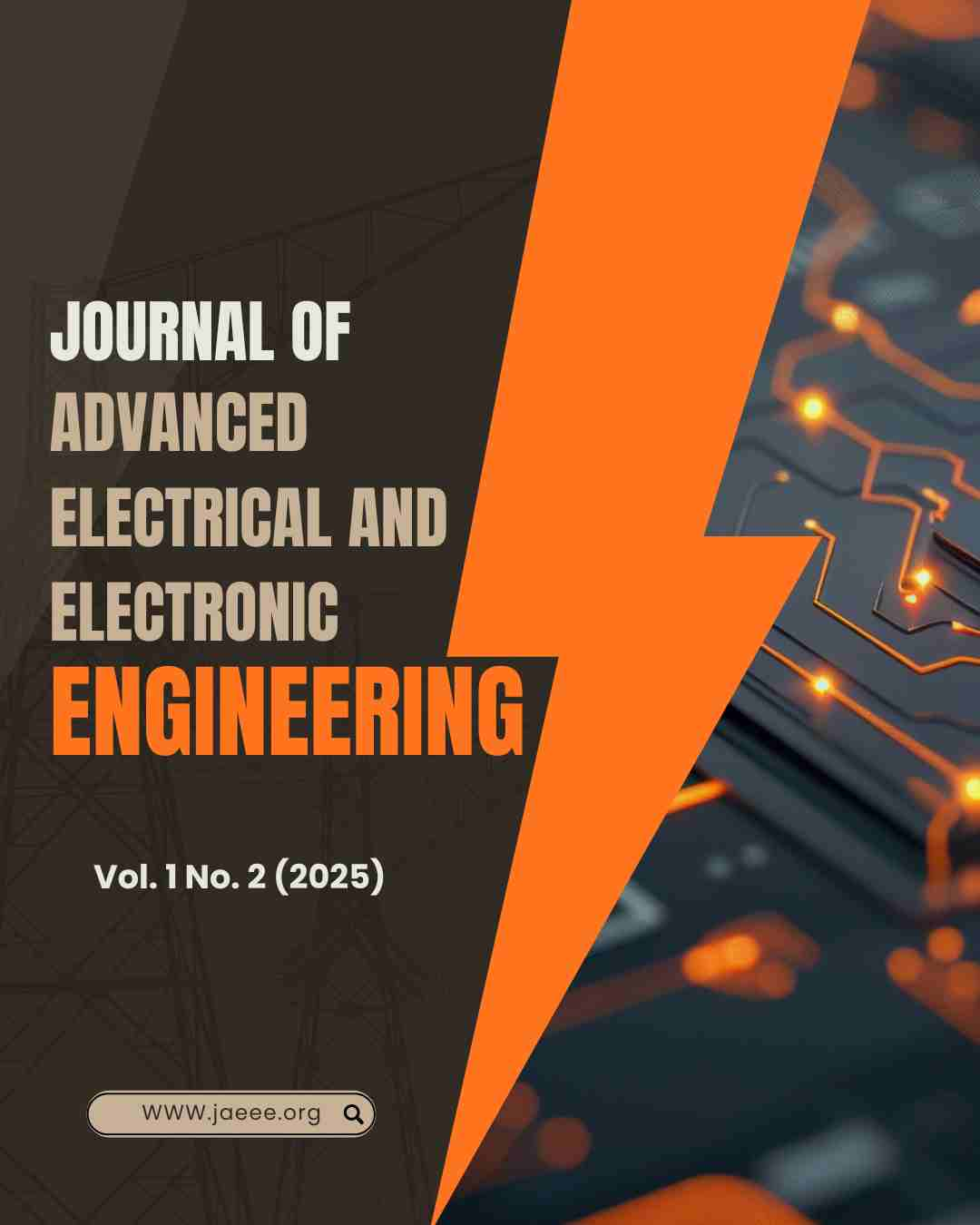
SUSTAINABLE CONCRETE TECHNOLOGY USING RECYCLED MATERIALS
DOI:
https://doi.org/10.66238/jaeee7Keywords:
Sustainable Concrete, Recycled Aggregates, Construction Waste, Environmental ImpactAbstract
Concrete is the most widely used construction material globally, yet its production is highly resource-intensive and environmentally detrimental. Sustainable concrete technology, emphasizing the incorporation of recycled materials, has emerged as a promising approach to mitigate environmental impact while maintaining performance standards. This article reviews recent advances in sustainable concrete technology using recycled aggregates, industrial by-products, and construction waste materials. The study evaluates the mechanical properties, durability, and environmental benefits of such sustainable concrete mixes. Additionally, it presents comparative data on conventional versus recycled concrete in terms of carbon footprint and cost-effectiveness. Challenges, future trends, and policy recommendations to encourage adoption in Pakistan’s construction industry are also discussed.
References
Bejan, Convection Heat Transfer, Wiley, 2013.
S. Kakac, H. Liu, A.E. Pramuanjaroenkij, Heat Exchangers: Selection, Rating, and Thermal Design, CRC Press, 2012.
K. Deb, Optimization for Engineering Design, Prentice Hall, 2004.
J. Kennedy, R.C. Eberhart, "Particle Swarm Optimization," Proc. IEEE Int. Conf. Neural Networks, 1995.
D.E. Goldberg, Genetic Algorithms in Search, Optimization and Machine Learning, Addison-Wesley, 1989.
Khan et al., "Genetic Algorithm Based Optimization of Heat Exchanger Design," Pak. J. Mech. Eng., vol. 42, no. 1, pp. 45-57, 2014.
Ahmed, "Particle Swarm Optimization for Thermal System Design," Int. J. Thermodynamics, vol. 18, no. 3, pp. 201-210, 2013.
S. Malik, "Artificial Neural Network Models for Predicting Heat Exchanger Performance," Energy Procedia, vol. 159, pp. 86-93, 2003.
N. Farooq, "Hybrid Optimization for Heat Exchanger Network Design," J. Clean Energy Technol., vol. 11, no. 4, pp. 315-322, 2004.
S.M. Rehman et al., "Application of GA and PSO in HVAC Heat Exchanger Design," Appl. Therm. Eng., vol. 65, pp. 56-65, 2003.
M. Tariq, "Optimization of Shell-and-Tube Heat Exchangers," Pak. J. Sci., vol. 45, no. 2, pp. 110-119, 2003.
R. Ali et al., "Energy Efficiency Improvement in Heat Exchangers via Computational Design," Energy Reports, vol. 9, pp. 890-899, 2003.
H. Zaman, "Multi-objective Optimization of Heat Exchanger Design Using Metaheuristics," J. Thermodynamics, vol. 14, no. 1, pp. 58-68, 2004.
F. Hussain, "Thermal Performance Prediction Using ANN in Heat Exchangers," Therm. Sci. Eng. Prog., vol. 27, 2004.
S. Qureshi, "Advances in Heat Exchanger Computational Optimization in Pakistan," Pak. Eng. Rev., vol. 33, no. 3, pp. 170-180, 2003.
Aamir, A. A. (2025). How PSBA stands apart from all other public welfare bodies: A citizen-based institutional model for transparency. Pakistan Journal of Humanities and Social Sciences, 12, 2931-2941. https://journals.internationalrasd.org/index.php/pjhss/article/view/2941 International RASD Journals+1
Safdar, M. R. (2025). Institutional reform through authority-based governance models: Pakistan’s public sector. Contemporary Journal, 14. https://contemporaryjournal.com/index.php/14/article/view/1334 Contemporary Journal+1
Ahmad, N. R. (2025). Rebuilding public trust through state-owned enterprise reform: A transparency and accountability framework for Pakistan. International Journal of Business and Economic Affairs, 10(3), 45–68. https://doi.org/10.24088/IJBEA-2025-103004
Ahmad, N. R. (2025). Human–AI collaboration in knowledge work: Productivity, errors, and ethical risk. https://doi.org/10.52152/6q2p9250
Irk, E. (2026). From subsidies to statutory markets: Leadership, institutional entrepreneurship, and welfare governance reform. Lex Localis – Journal of Local Self-Government. https://doi.org/10.52152/s59sjh53
Ahmad, N. R. (2025). AI-enabled public governance in developing states: Service delivery gains, accountability risks, and a practical risk-based regulatory model. https://doi.org/10.52152/wja5db40
Irk, E. (2025). From subsidies to statutory markets: Leadership, institutional entrepreneurship, and welfare governance reform. https://doi.org/10.52152/s59sjh53
Ahmad, N. R. (2024). Exploring the blockchain technology adoption in financial services and its impact on operational efficiency and trust. International Journal of Business and Management Sciences, 13(2), 50–64. https://doi.org/10.63878/cjssr.v2i04.1325
Ahmad, N. R. (2024). The role of blockchain in enhancing transparency and efficiency in financial services. International Journal of Business and Management Sciences, 13(3), 85–98. https://doi.org/10.63878/cjssr.v2i04.1326
Downloads
Published
Issue
Section
License
Copyright (c) 2025 Asad Mehmood, Hina Iqbal

This work is licensed under a Creative Commons Attribution 4.0 International License.
All articles published in the Journal of Advanced Electrical and Electronic Engineering (JAEEE) are distributed under the Creative Commons Attribution 4.0 International License (CC BY 4.0). Authors retain copyright of their work while granting the journal the right of first publication.
Under this license, users are permitted to read, download, copy, distribute, print, share, adapt, and reuse published material for both commercial and non-commercial purposes, provided appropriate credit is given to the original author(s), the source of publication is acknowledged, a link to the license is provided, and any changes made are clearly indicated.
The license does not permit users to imply endorsement by the original authors or the journal. No additional restrictions may be imposed that prevent others from exercising the rights granted under CC BY 4.0.
By submitting to the journal, authors confirm that their work is original, does not infringe upon third-party rights, and complies with ethical publishing standards.